Underground Utility Plumbing
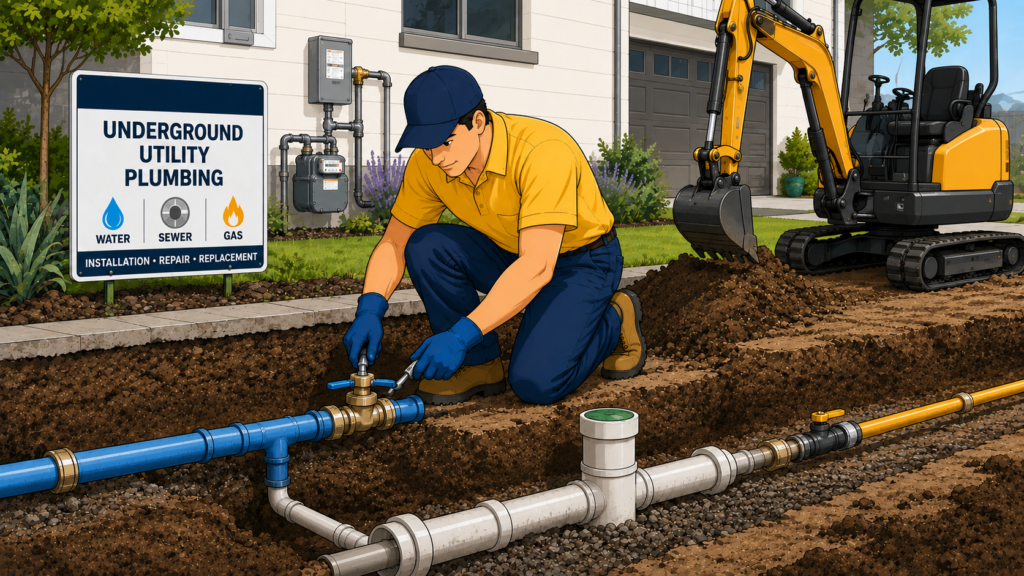
Underground plumbing lines connect a property’s interior plumbing system to essential water, sewer, gas, and utility infrastructure. Although these pipes remain hidden beneath soil, landscaping, concrete, patios, driveways, and parking areas, they play a central role in the daily operation of homes and commercial properties.
When an underground line leaks, breaks, shifts, or becomes blocked, the symptoms may appear far from the actual source. A damaged water pipe can create unexplained wet areas in the yard, low water pressure, or unusually high utility bills. A deteriorated sewer line may cause recurring backups and unpleasant odors, while a damaged underground gas line can create an immediate safety concern.
RDZ Plumbing and Drains provides underground utility plumbing services for residential, commercial, rental, restaurant, and multi-unit properties throughout San Diego. Our plumbers evaluate the existing system, identify the affected utility line, and recommend the most appropriate installation, repair, replacement, or rerouting solution.
Get A Free Quotes
Complete Underground Plumbing Services
Underground utility plumbing may involve several different pipe systems located within the same property. These lines often cross lawns, gardens, driveways, patios, parking areas, building foundations, and other permanent surfaces.
Our work may include underground water supply lines, sewer laterals, gas piping, fixture branches, outdoor kitchen utilities, detached-building connections, commercial utility lines, and plumbing installed during new construction.
The correct approach depends on the type of utility, pipe material, depth, soil conditions, surrounding structures, nearby systems, and the reason the line requires service.
Because underground plumbing cannot be fully inspected from the surface, professional diagnosis is essential before excavation begins. The objective is to determine where the problem is located and limit unnecessary digging whenever possible.
Underground Water Line Installation and Repair
The underground water service line delivers pressurized water from the property connection to the building’s plumbing system. Additional underground water lines may also serve guest houses, accessory dwelling units, outdoor kitchens, irrigation connections, detached garages, pool areas, and commercial equipment.
A damaged underground water line may leak continuously without producing an obvious indoor plumbing problem. Water can escape into the surrounding soil, travel beneath concrete, or appear in an area located some distance from the damaged pipe.
Common signs include unusually high water bills, low pressure throughout the property, water-meter movement when fixtures are off, soft soil, unexplained puddles, or areas of unusually green vegetation.
After locating the affected section, the line may be repaired, partially replaced, rerouted, or completely replaced depending on its material and condition.
A localized repair may be appropriate when the damage is limited and the remaining pipe is reliable. Complete replacement may be more practical when the line is heavily corroded, repeatedly leaking, improperly sized, or constructed from deteriorated materials.
Underground Sewer Line Plumbing
Underground sewer lines carry wastewater away from the building and toward the property’s sewer connection. These pipes operate through gravity and must maintain the correct route, slope, support, and connection throughout their length.
Sewer problems may result from roots, corrosion, soil movement, damaged joints, heavy buildup, improper installation, vehicle pressure, or aging pipe materials.
The first warning signs are often repeated drain blockages, slow drainage across several fixtures, gurgling toilets, sewage odors, or wastewater appearing near a cleanout.
A sewer camera inspection can help identify where the problem is located and whether the line requires cleaning, localized repair, pipe lining, trenchless replacement, or traditional excavation.
Underground sewer work may involve repairing one damaged section, replacing a longer run of pipe, installing new cleanouts, correcting improper slope, or reconnecting sewer branches serving additions and detached structures.
Underground Gas Line Plumbing
Buried gas lines may supply outdoor kitchens, barbecue grills, fire pits, fireplaces, pool heaters, detached buildings, commercial equipment, and other gas-powered appliances.
These lines must be correctly sized, routed, protected, supported, and tested before use. Gas demand must be calculated according to the connected equipment and pipe length, since an undersized line may prevent appliances from operating properly.
Underground gas pipes can be damaged by corrosion, excavation, soil movement, landscaping, construction equipment, or accidental impact.
A suspected gas leak should always be treated as an emergency. Occupants should leave the affected area, avoid flames and electrical switches, and contact the gas utility or emergency services from a safe location.
Once the property has been declared safe, our plumbers can inspect the affected piping, locate the damaged section, complete the necessary repair, and test the system before service restoration.
Plumbing for Detached Buildings and Property Additions
Guest houses, accessory dwelling units, detached garages, workshops, pool houses, and backyard structures may require underground water, sewer, and gas connections.
These projects should be planned carefully because each utility must travel between structures while maintaining proper depth, protection, slope, sizing, and separation from other systems.
The plumbing plan may include a new water supply, sewer branch, gas line, shutoff valves, cleanouts, utility sleeves, and future maintenance access.
Installing underground utilities before concrete, landscaping, driveways, or permanent outdoor features are completed can reduce future disruption and project cost.
When an existing property is being expanded, the current plumbing system should also be evaluated to confirm that it can support the additional fixtures and equipment.
Underground Plumbing for Outdoor Kitchens
Outdoor kitchens often require several underground utilities within one project.
Water lines may serve the sink, faucet, ice maker, dishwasher, or beverage station. The drain must connect to an appropriate sanitary system, while gas piping may supply grills, burners, ovens, or fire features.
Utility routes should be planned before outdoor cabinets, counters, patios, tile, and appliances are installed.
Improper routing can result in drainage problems, insufficient gas supply, inaccessible shutoff valves, or pipes located beneath areas that are difficult to reopen.
Our plumbers coordinate underground water, drainage, and gas connections around the final outdoor-kitchen layout and equipment specifications.
Underground Utility Plumbing for New Construction
New construction provides an opportunity to design underground plumbing according to the complete property plan.
Before the foundation, concrete, landscaping, and finished surfaces are installed, underground lines can be routed to their intended fixture and equipment locations.
New construction underground plumbing may include the main water line, sewer lateral, gas service branches, building drains, cleanouts, utility sleeves, outdoor plumbing, and future-use connections.
Accurate measurements and coordination are essential. A pipe installed in the wrong position can conflict with framing, foundations, cabinets, equipment, electrical systems, or other utility lines.
Pressure tests, drainage tests, and inspections should be completed before the piping is permanently covered.
Underground Plumbing During Remodels
Large remodels and property conversions may require existing underground plumbing to be modified.
A kitchen or bathroom addition may need a new drain route. A guest house may require water and sewer connections. An outdoor cooking area may need a new gas line, while an expanded commercial space may need larger water or sewer capacity.
Existing underground pipes should be located and evaluated before excavation begins.
Older properties may contain abandoned lines, undocumented repairs, mixed pipe materials, or utilities that do not follow the expected route. Planning around the actual system helps reduce accidental damage and unexpected changes during construction.