Sewer Line Repair
A damaged sewer line can cause recurring blockages, sewage odors, slow drainage, wastewater backups, and unsanitary conditions inside or around the property. While professional drain cleaning may remove an obstruction and restore temporary flow, it cannot permanently correct a cracked, corroded, separated, deformed, or collapsed sewer pipe.
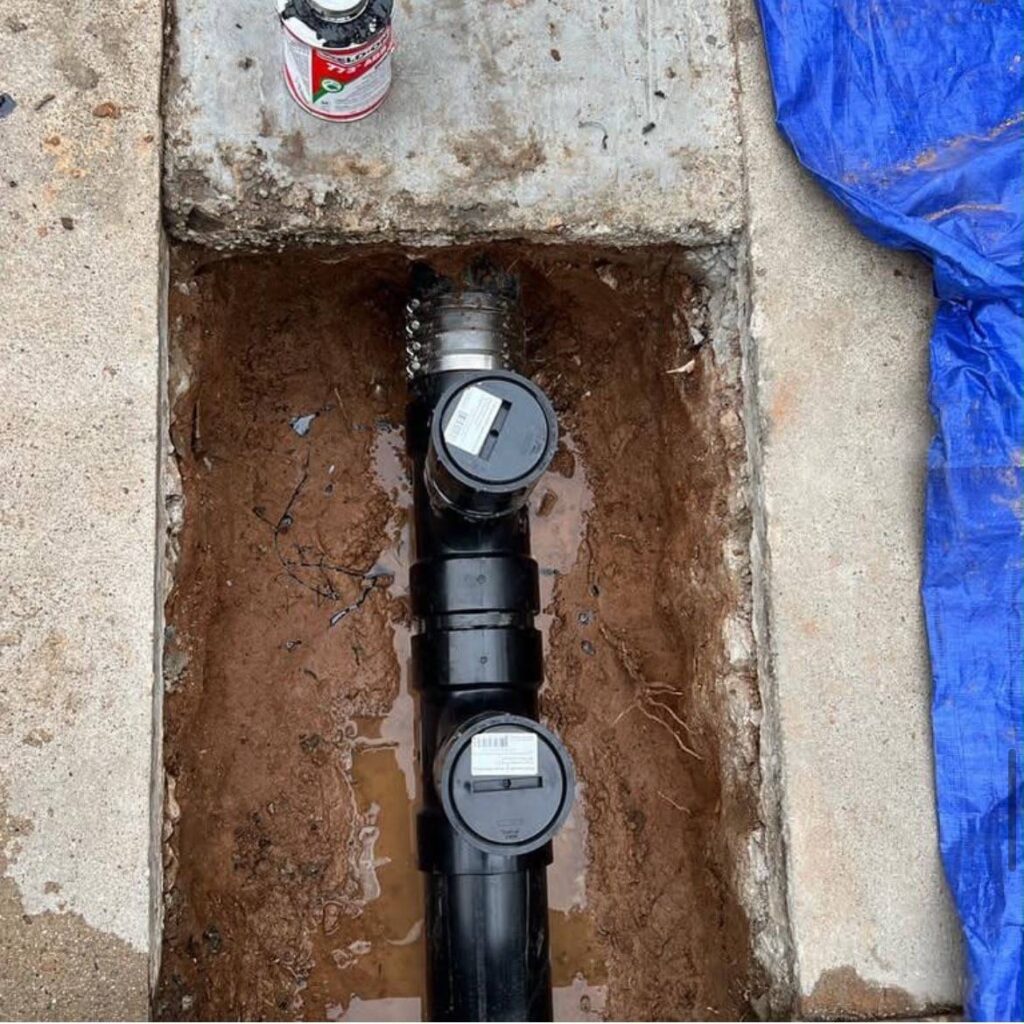
RDZ Plumbing and Drains provides professional sewer line repair for homes, restaurants, rental properties, commercial facilities, and multi-unit buildings throughout San Diego. Our plumbers inspect the sewer system, identify the location and extent of the damage, and recommend a repair method based on the pipe material, condition, depth, route, and surrounding property.
Depending on the findings, the solution may involve a localized pipe repair, sewer pipe lining, trenchless replacement, installation of a new sewer section, or traditional excavation. Our goal is to correct the actual pipe failure while limiting unnecessary disruption to landscaping, concrete, flooring, and daily property use whenever possible.
Get A Free Quotes
Signs of a Damaged Sewer Line
Sewer problems often develop gradually. A property may experience occasional slow drainage or repeated clogs before a more serious backup occurs. Because the sewer line is underground, the visible symptoms may appear far from the damaged section.
One of the clearest warning signs is a problem affecting several fixtures at the same time. A single slow sink may have a localized blockage, but toilets, showers, tubs, and floor drains backing up together usually indicate a deeper problem in a shared drain or main sewer line.
Wastewater may return through the lowest fixture in the building, particularly a shower, bathtub, or floor drain. Toilets may gurgle when another fixture is used, and sewage odors may appear inside bathrooms, kitchens, garages, utility areas, or around outdoor cleanouts.
Other possible signs include:
- Repeated main-line blockages
- Several slow drains throughout the property
- Sewage backing up through toilets or floor drains
- Gurgling sounds from plumbing fixtures
- Wastewater or moisture around a sewer cleanout
- Strong sewer odors inside or outside the building
- Soft, wet, or unusually green areas in the yard
- Repeated tree-root intrusion
- Drain cleaning that provides only temporary improvement
- Cracks, corrosion, or displaced joints found during camera inspection
Recurring problems should not be treated indefinitely as ordinary clogs. They may indicate that the sewer pipe itself requires repair.
What Causes Sewer Line Damage?
Sewer lines can fail because of age, corrosion, roots, soil movement, poor installation, heavy buildup, or physical damage.
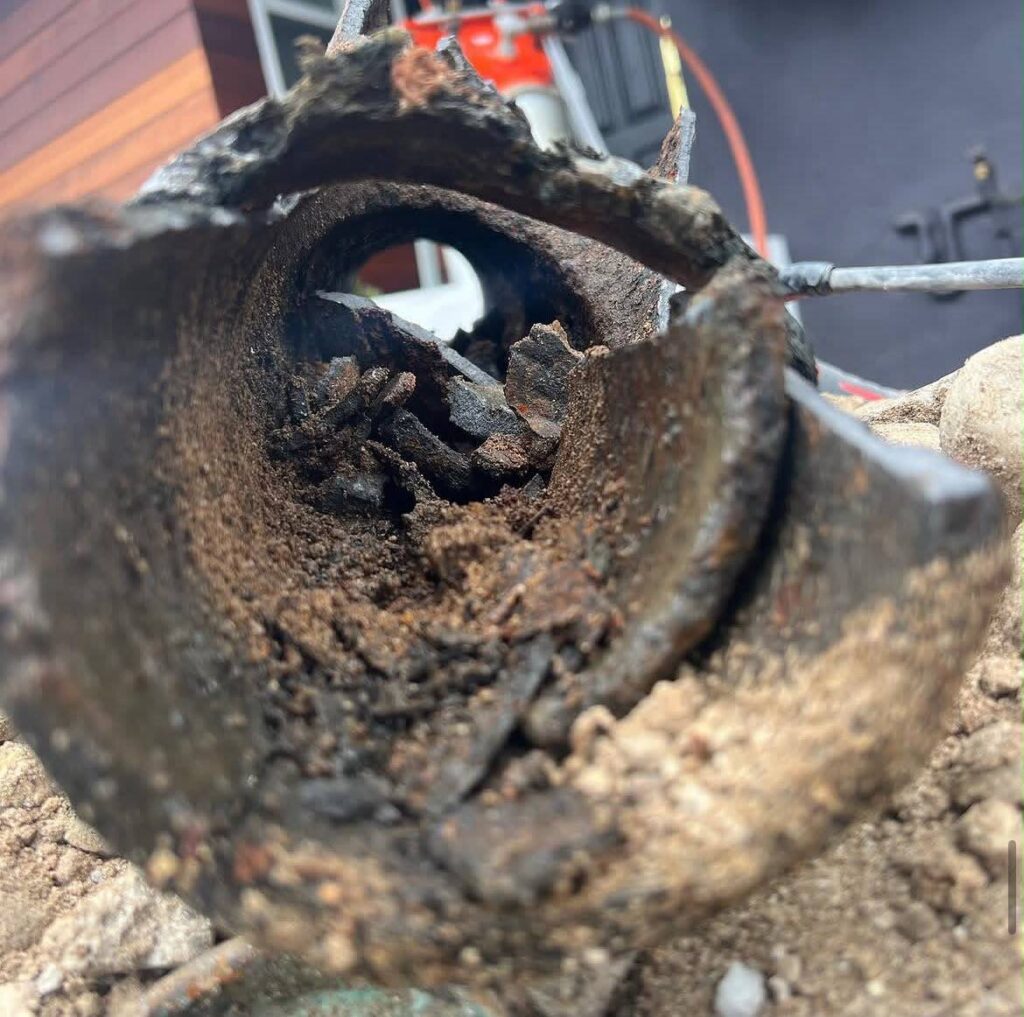
Older cast-iron pipes may corrode from the inside, creating rough surfaces that collect waste and gradually reduce the usable opening. As deterioration continues, cracks and holes may form in the pipe wall.
Clay sewer lines are often vulnerable at their joints. Soil movement can separate or offset individual pipe sections, creating openings where roots enter and uneven surfaces where waste becomes trapped.
Tree roots naturally grow toward moisture. Even a small crack or loose joint can provide access to the sewer. Once roots enter the pipe, they expand and collect paper, grease, and debris, causing increasingly frequent blockages.
PVC and other modern materials can also become damaged when improperly installed, unsupported, exposed to soil movement, or affected by construction and excavation.
Sewer Camera Inspection Before Repair
A sewer camera inspection is an important first step when structural damage is suspected.
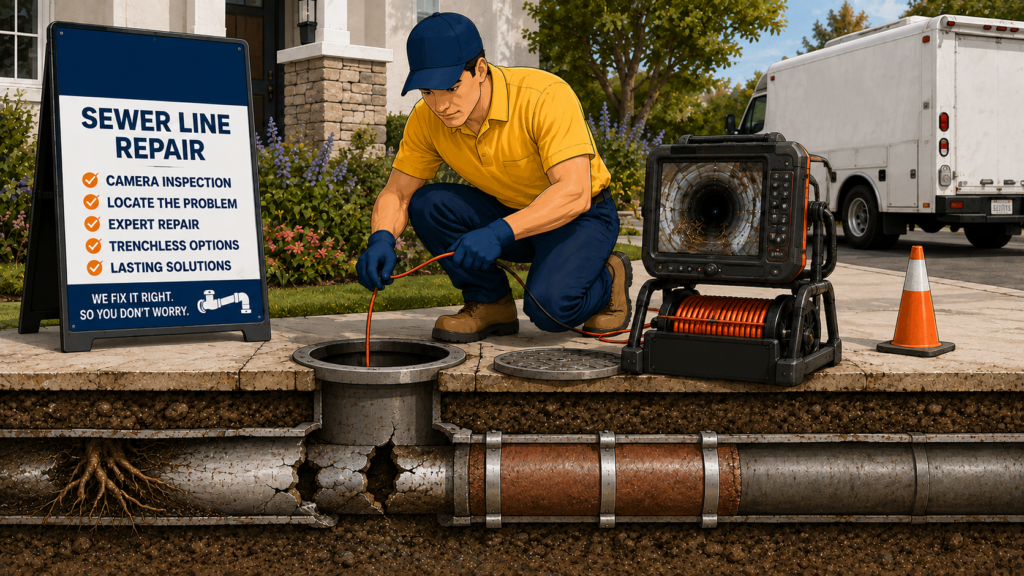
A waterproof camera is inserted through a cleanout or another suitable access point and guided through the sewer line. The live image helps the plumber evaluate the pipe material, internal surface, joints, roots, buildup, cracks, standing water, and collapsed sections.
The inspection can help answer several important questions. It shows whether the problem is concentrated in one area or spread throughout a longer section. It may also reveal whether the pipe remains sufficiently open for lining or trenchless replacement.
Heavy grease, roots, scale, and waste may prevent the camera from seeing the complete pipe surface. In those situations, the line may need to be cleaned before a reliable repair recommendation can be made.
After cleaning, another inspection can reveal damage that was previously hidden beneath buildup.
Emergency Sewer Line Problems
An active sewage backup should be addressed promptly.
Stop using toilets, sinks, showers, washing machines, dishwashers, and other fixtures connected to the affected sewer. Continuing to send wastewater into the system can increase the overflow.
Avoid contact with sewage and keep people and pets away from contaminated areas. Professional cleanup may be required after the plumbing problem has been controlled.
A sewer emergency may initially require drain cleaning to restore flow. Once the line is open, a camera inspection can determine whether structural damage caused the blockage and whether permanent repair is needed.