
Toilet Installation and Repair
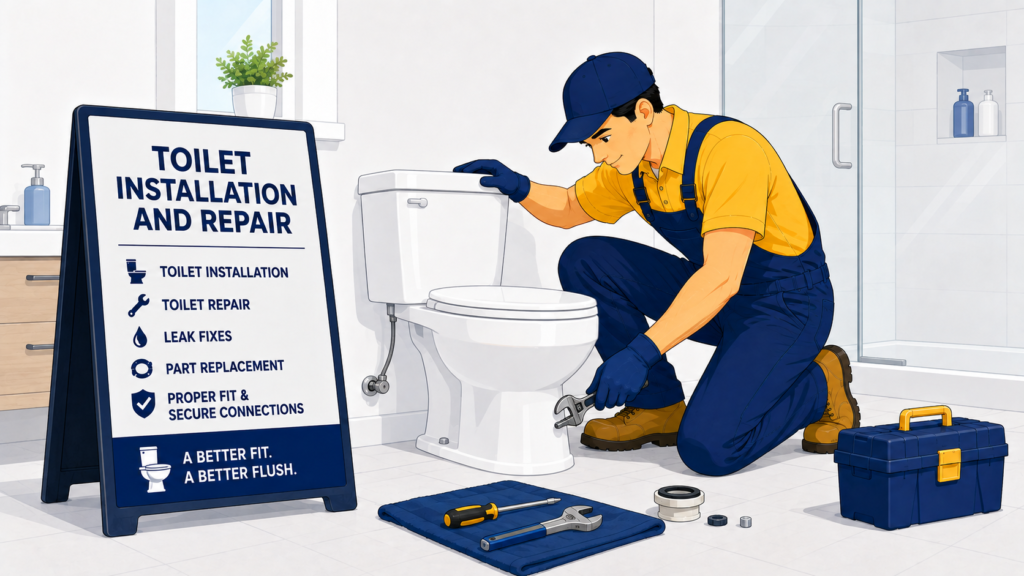
A toilet should remain stable, flush efficiently, refill correctly, and maintain a secure, leak-free connection with the drainage system. When it rocks, leaks around the base, runs continuously, clogs repeatedly, or no longer performs reliably, professional service can help determine whether repair or complete replacement is the better solution.
RDZ Plumbing and Drains provides professional toilet installation and repair for homes, apartments, condominiums, rental properties, restaurants, offices, commercial restrooms, and multi-unit buildings throughout San Diego.
Our plumbers install new toilets, replace outdated or damaged fixtures, repair tank components, correct leaking base seals, replace supply connections, evaluate damaged flanges, and clear toilet-related drain blockages. Before recommending a new fixture, we inspect the existing toilet and surrounding plumbing to determine whether a dependable repair remains possible.
For new installations and replacements, we verify that the selected toilet is compatible with the bathroom layout, rough-in distance, drain connection, water supply, available clearance, and intended level of use.
Get A Free Quotes
Complete Toilet Installation and Repair Services
Toilet service involves more than the visible porcelain fixture. The toilet depends on a working water-supply valve, secure connector, properly operating tank components, stable mounting hardware, a reliable flange, an appropriate base seal, and an open drain connection.
A problem in any one of these components can cause leakage, water waste, sewer odors, poor flushing, fixture movement, or wastewater backups.
Our service may include the installation of a completely new toilet, replacement of an old unit, resetting an existing fixture, repair of internal tank components, replacement of the wax ring or alternative seal, toilet-flange repair, supply-line replacement, shutoff-valve replacement, and clearing of localized toilet blockages.
When the problem extends beyond the toilet into the branch drain or main sewer line, we explain what additional drain cleaning, camera inspection, or sewer service may be required.
New Toilet Installation
A completely new toilet installation may be needed in a bathroom addition, new construction project, accessory dwelling unit, converted space, commercial restroom, or remodeled property.
The drain, flange, water supply, shutoff valve, and surrounding floor must be prepared before the fixture is installed. The toilet must also match the planned rough-in dimensions and provide enough clearance from walls, cabinets, doors, showers, and other bathroom fixtures.
The installation begins with an inspection of the drain opening and flange. A new base seal is positioned, and the toilet is carefully lowered into place without disturbing the connection.
The fixture is aligned and secured without overtightening the mounting hardware. Excessive pressure can crack the porcelain or distort the toilet base.
The tank, seat, supply connector, and other components are then assembled according to the fixture design. Water service is restored gradually, and the toilet is tested through several flush and refill cycles.
We verify that the toilet remains stable, fills correctly, flushes completely, shuts off properly, and does not leak around the tank, supply line, valve, or base.
Toilet Replacement
A toilet replacement removes an existing fixture and installs a new model in its place.
Replacement may be appropriate when the old toilet is cracked, frequently clogged, unstable, heavily stained, difficult to repair, inefficient, or no longer compatible with the bathroom’s needs.
Before removing the old fixture, we inspect the water-supply valve and surrounding floor. Once the water is shut off, the tank and bowl are drained and disconnected.
After the toilet is lifted, the flange and drain opening become visible. This is an important inspection point because damage beneath the toilet may have remained hidden for years.
The flange may be cracked, loose, corroded, positioned at the wrong height, or surrounded by deteriorated flooring. Installing a new toilet without correcting these problems can cause the fixture to rock or leak shortly after replacement.
Once the connection area is ready, the new toilet is installed, secured, connected, and tested.
Signs It May Be Time to Replace Your Toilet
Many toilet problems can be repaired, but replacement may provide better long-term value when several components have deteriorated.
A toilet with a cracked bowl or tank should generally be replaced because porcelain damage can expand unexpectedly and release water. A fixture that continues clogging despite a clear drain may have a restricted or poorly designed internal trap.
Frequent leaks, unstable mounting, severe mineral buildup, unavailable replacement parts, and repeated internal repairs may also indicate that the fixture has reached the end of its dependable service life.
Replacement should be considered when:
- The bowl or tank is structurally cracked
- The toilet clogs repeatedly
- Several internal components keep failing
- Water continually appears around the base
- The fixture rocks despite previous resetting
- Replacement parts are unavailable
- Flushing performance remains poor after repair
- The toilet consumes more water than desired
- The bathroom is being completely remodeled
- Accessibility or comfort requirements have changed
The fixture should be evaluated together with the flange and drain system before a replacement model is selected.
Our Toilet Installation and Repair Process
The service begins with a review of the problem, bathroom layout, fixture condition, and plumbing history.
For repairs, we inspect the tank, bowl, base, supply line, shutoff valve, mounting, flange, and drainage response. We determine whether the issue is internal to the fixture or connected to the branch drain or sewer.
For replacement, we confirm the new toilet’s dimensions, rough-in, bowl shape, height, supply location, and bathroom clearance.
The water supply is isolated, and the old fixture is drained and removed when necessary. The flange, seal area, drain opening, and surrounding floor are inspected.
Damaged plumbing components are repaired or replaced before the toilet is installed.
The fixture is then positioned, secured, connected, and tested through several flush and refill cycles.
We verify stable mounting, complete flushing, proper tank refill, complete shutoff, correct water level, and leak-free connections around the tank, supply line, shutoff valve, and base.