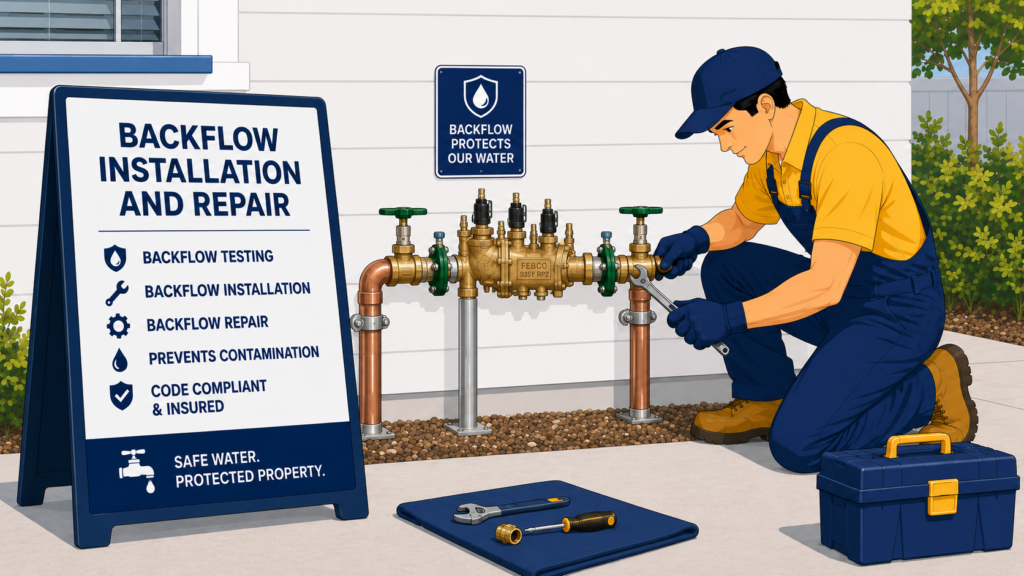
Backflow Installation and Repair
A plumbing system is designed to move clean water in one direction—from the approved water supply toward fixtures, appliances, irrigation equipment, and other connected systems. When pressure conditions change, contaminated or non-potable water may attempt to move in the opposite direction and enter the clean water supply.
A properly selected and installed backflow prevention assembly helps protect the property’s potable water from this reversal.
RDZ Plumbing and Drains provides professional backflow installation, replacement, and repair for residential, commercial, restaurant, rental, irrigation, and multi-unit plumbing systems throughout San Diego.
Our plumbers evaluate the connected equipment, water pressure, installation location, pipe size, drainage requirements, accessibility, and type of cross-connection before recommending an appropriate backflow prevention solution.
Whether the property needs a new assembly, replacement of an aging device, repair after a failed inspection, or plumbing modifications around existing equipment, the installation must be completed carefully so the system remains protected and serviceable.
Get A Free Quotes
What Is Backflow?
Backflow occurs when water moves through a plumbing system in the opposite direction from its intended flow.
Under normal conditions, water pressure pushes clean water from the supply toward fixtures and equipment. If pressure inside the building or public supply changes, water from an irrigation line, boiler, commercial appliance, fire system, treatment device, or another connected source may be drawn or pushed back toward the potable water system.
The water involved may contain fertilizers, chemicals, bacteria, sediment, cleaning products, food residue, stagnant water, or other material that should not enter the drinking-water supply.
Backflow prevention equipment creates a controlled barrier between potable plumbing and systems that may present a contamination risk.
The correct assembly depends on the plumbing application and the level of protection required. One backflow device should not be assumed to work for every type of connection.
Backpressure and Backsiphonage
Backflow can occur through two primary pressure conditions: backpressure and backsiphonage.
Backpressure
Backpressure occurs when pressure on the downstream side of a plumbing connection becomes greater than the pressure in the potable supply.
This may happen in systems involving pumps, boilers, elevated equipment, pressurized tanks, thermal expansion, commercial machinery, or other equipment that can create its own pressure.
When the connection is not properly protected, downstream water may be forced backward into the clean water line.
Backsiphonage
Backsiphonage occurs when the potable water supply develops negative or reduced pressure that draws water backward from a connected system.
Possible causes include a water-main break, high firefighting demand, utility work, a large plumbing-system shutdown, or heavy simultaneous water usage.
A hose submerged in contaminated water, an irrigation system, or improperly protected equipment may allow unwanted water to be pulled back toward the potable supply during these conditions.
The selected backflow assembly must be appropriate for the pressure conditions and risk associated with the plumbing connection.
Why Backflow Prevention Matters
Water contamination is not always visible. Water may appear clear while containing chemicals, microorganisms, sediment, or other unwanted material.
A cross-connection can create a direct pathway between potable water and a system that was never intended to supply drinking water.
Backflow prevention helps protect:
- Drinking and cooking water
- Bathroom and kitchen fixtures
- Commercial food-preparation areas
- Apartment and condominium water systems
- Irrigation connections
- Boiler and mechanical equipment
- Water-treatment systems
- Outdoor plumbing installations
- Shared building water mains
- Public water infrastructure
The assembly must be properly sized, installed in the correct orientation, protected from damage, and kept accessible for future inspection and service.
Our Backflow Installation and Repair Process
The service begins with an evaluation of the water system, connected equipment, assembly type, pipe size, pressure, location, and reported problem.
For a new installation, we determine the appropriate device location and review drainage, access, support, orientation, and downstream demand.
For repairs, we inspect the assembly body, valves, test connections, visible seals, relief section, and surrounding piping. Pressure conditions and connected equipment may also be evaluated.
The water supply is shut down and isolated as required. The existing assembly is repaired, removed, replaced, or repositioned according to the service plan.
New fittings, shutoff valves, unions, supports, and drainage components are installed when needed.
Water service is restored gradually while all connections are checked for leakage and operation.
Where required, the assembly is prepared for testing, certification, or inspection by an appropriately authorized professional.