
Grease Trap Installation
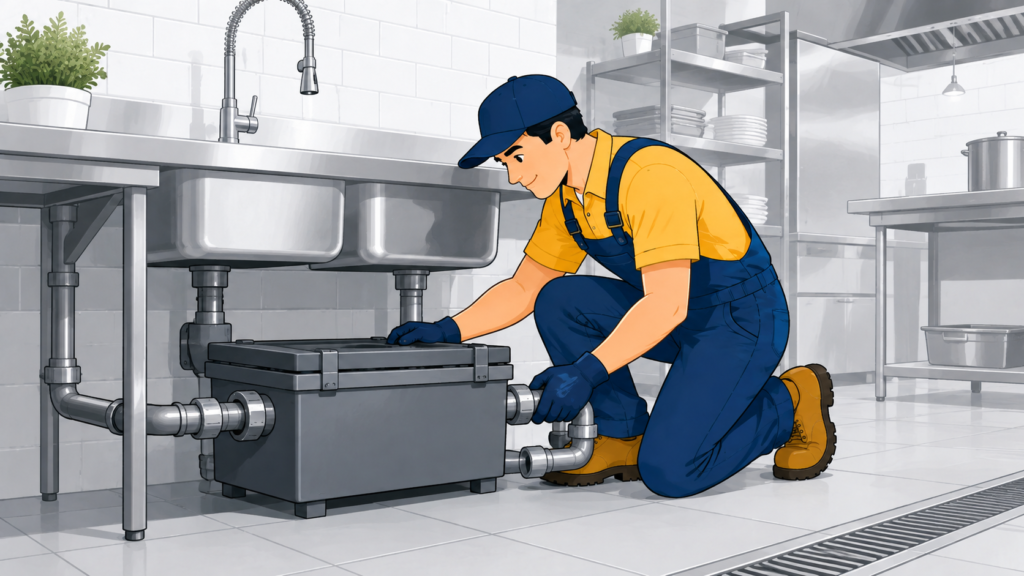
Commercial kitchens produce fats, oils, grease, and food residue that should not enter the public sewer system. Without proper separation equipment, this material can collect inside drainpipes, cause recurring blockages, create unpleasant odors, and contribute to costly sewer backups.
RDZ Plumbing and Drains provides professional grease trap installation for restaurants, cafés, bakeries, commercial kitchens, food preparation facilities, and other businesses throughout San Diego.
Our team evaluates kitchen usage, available space, plumbing layout, fixture connections, expected flow, and applicable installation requirements before recommending a suitable grease trap or grease interceptor.
A properly selected and installed system helps protect your drainage lines, improve kitchen reliability, and support responsible wastewater management.
Get A Free Quotes
What Is a Grease Trap?
A grease trap is a plumbing device designed to separate fats, oils, grease, and food solids from wastewater before the water enters the drainage and sewer system.
As wastewater enters the unit:
- The flow slows inside the chamber.
- Heavier food particles settle toward the bottom.
- Fats, oils, and grease rise toward the surface.
- The separated wastewater exits through the outlet.
- Accumulated grease and solids remain inside until removed.
Grease traps are commonly installed beneath sinks, near kitchen fixtures, or in other accessible interior locations.
Larger grease interceptors may be installed outdoors or underground to manage higher wastewater volumes.
Grease Trap Installation Services
We install grease separation systems for new restaurants, commercial kitchens, renovated food service spaces, and businesses adding food preparation equipment.
The installation is planned around the kitchen’s plumbing layout, fixture demand, and available space.
High-volume kitchens may require a larger interceptor to handle wastewater from several fixtures.
Installation may involve excavation, underground piping, access covers, venting, flow control, and coordination with the building sewer connection.