Multi-Unit Plumbing
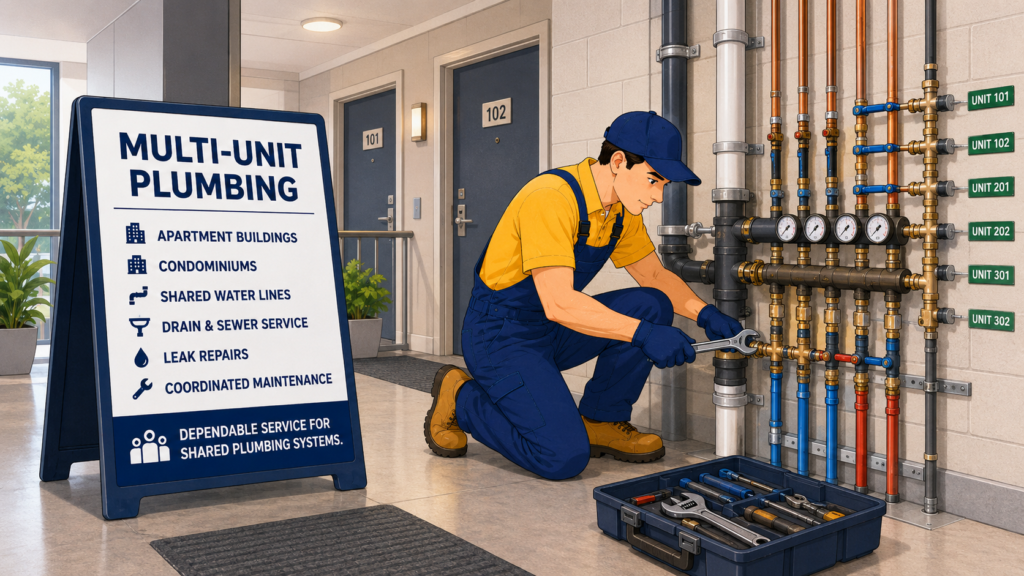
Plumbing systems in apartment buildings, condominiums, duplexes, townhomes, and mixed-use properties are more complex than systems serving a single residence. Several units may depend on shared water lines, sewer stacks, underground mains, water heaters, pressure-control equipment, and shutoff valves. A problem that begins in one apartment can quickly affect neighboring units or an entire section of the building.
RDZ Plumbing and Drains provides professional multi-unit plumbing services for property owners, property managers, homeowners associations, landlords, developers, and commercial building operators throughout San Diego.
Our plumbers diagnose and repair shared plumbing problems, unit-specific fixture issues, water leaks, recurring drain blockages, sewer backups, water-heater failures, pressure problems, and deteriorated piping. We also provide repiping, fixture replacement, plumbing for unit renovations, new construction, underground utility work, and preventive maintenance.
Multi-unit plumbing requires more than repairing the visible problem. The system must be evaluated to determine which units are connected, where the affected branch begins, whether the issue involves a shared line, and how the work can be completed while limiting disruption to occupants.
Get A Free Quotes
Plumbing Services for Multi-Unit Properties
A multi-unit property may contain hundreds of individual plumbing connections while relying on several central systems. Each apartment may have its own kitchen, bathroom, laundry connections, water heater, and shutoff valves, but those fixtures often connect to shared risers, stacks, building drains, sewer laterals, and main water lines.
This means a leak or blockage cannot always be diagnosed by inspecting only the unit where the problem became visible. Water may travel through walls, ceilings, concrete, and structural cavities before appearing in another apartment. Wastewater may back up through the lowest fixture even though the obstruction is located several floors or units away.
Our multi-unit plumbing services include repairs, leak detection, drain and sewer cleaning, camera inspections, repiping, fixture installation, water-heater service, underground plumbing, and emergency response. We evaluate the complete affected plumbing zone so the repair addresses the source rather than only the resulting damage.
Apartment Building Plumbing
Apartment buildings often have shared vertical and horizontal plumbing systems that serve several tenants.
Water-supply risers distribute hot and cold water between floors. Branch lines carry water into individual units, while drain stacks move wastewater downward toward the building sewer. Vent stacks allow air to enter the drainage system and help protect fixture traps from pressure changes.
A problem in one of these shared components can create symptoms in several apartments. A damaged riser may cause pressure loss or leakage across multiple floors. A blocked stack may produce gurgling, slow drainage, or wastewater backups in units located below the obstruction.
Our plumbers determine whether the problem is located inside one apartment or within a common building system. This helps property managers coordinate access, notify affected tenants, and avoid unnecessary repairs inside units that are not connected to the damaged section.
Condominium and HOA Plumbing
Condominium plumbing may involve both individually maintained fixtures and shared building infrastructure.
The exact responsibility for a repair can depend on where the damaged pipe is located and which units it serves. A leaking faucet or toilet may be limited to one residence, while a damaged riser, stack, sewer main, roof drain, or central water system may fall within common property maintenance.
RDZ Plumbing and Drains provides plumbing inspection and repair information that can help owners, associations, and property managers understand the affected area. We identify which pipe or fixture is involved, where access may be required, and whether other units are connected to the same plumbing section.
Clear documentation and communication are especially important when an association needs to coordinate repairs, tenant access, water shutdowns, restoration contractors, or insurance-related work.
Shared Water Supply Lines
Multi-unit properties frequently rely on common water mains and vertical risers before the supply branches into individual apartments.
A shared water-line problem may create low pressure, discolored water, leaks inside walls, or interrupted service across several units.
Older buildings may contain corroded galvanized steel, aging copper, mixed pipe materials, or previous repairs completed at different times. These conditions can make it difficult to isolate one leak without evaluating the surrounding system.
When a shared pipe fails, the repair plan must identify which units need to be shut down and whether temporary service can remain available elsewhere in the property.
A localized repair may be appropriate for one damaged connection. When corrosion or repeated leaks affect a longer section, replacement of the riser or distribution line may provide a more dependable result.
Plumbing for Multi-Unit Renovation Projects
Larger renovation projects may upgrade several apartments or an entire building.
Working across multiple units creates an opportunity to standardize plumbing layouts, improve shutoff access, replace deteriorated piping, upgrade water heaters, and correct recurring drainage problems.
The project may be completed floor by floor, stack by stack, or unit by unit depending on the building layout and occupancy.
Material storage, tenant access, water shutdowns, debris removal, inspection scheduling, and finish restoration should be planned before work begins.
Consistent documentation helps property managers know what was replaced in each unit and where new valves, cleanouts, and access points are located.
Our Multi-Unit Plumbing Process
The service begins with a review of the property layout, affected units, reported symptoms, previous repairs, and available plumbing information.
Our plumber inspects the visible fixtures and piping, then determines whether the problem is localized or connected to a shared system.
Diagnostic work may involve leak detection, pressure testing, drain cleaning, sewer camera inspection, water-meter evaluation, or isolation of individual branches.
Once the source has been identified, we explain the recommended repair, required access, affected water or sewer zones, and expected service interruptions.
The work is coordinated with property management and occupants. Damaged components are repaired or replaced using suitable plumbing materials and installation methods.
After the repair, the system is tested. Water lines are checked for pressure and leakage, drains are tested for proper flow, fixtures are operated, and affected units are reviewed for continued symptoms.
For larger projects, documentation can identify which sections were repaired and which areas may require future maintenance or replacement.