Garbage Disposal Installation
A properly installed garbage disposal can make everyday kitchen cleanup more convenient while helping food residue move efficiently through the sink’s drainage system. When the unit is incorrectly connected, damaged, leaking, or no longer operating reliably, it can cause slow drainage, unpleasant odors, water beneath the sink, electrical problems, or wastewater backing up into the sink or dishwasher.
RDZ Plumbing and Drains provides professional garbage disposal installation and replacement for homes, apartments, rental properties, commercial spaces, and remodeling projects throughout San Diego.
Our plumbers inspect the kitchen sink, drain configuration, existing disposal, dishwasher connection, shutoff components, and available space before installing the new unit. We make sure the disposal is securely mounted, correctly connected to the drainage system, and tested for proper operation and leaks.
Whether you are replacing a failed disposal or adding one to a kitchen that has never had one, professional installation helps protect the sink cabinet and surrounding plumbing from avoidable problems.
Get A Free Quotes
Professional Garbage Disposal Installation
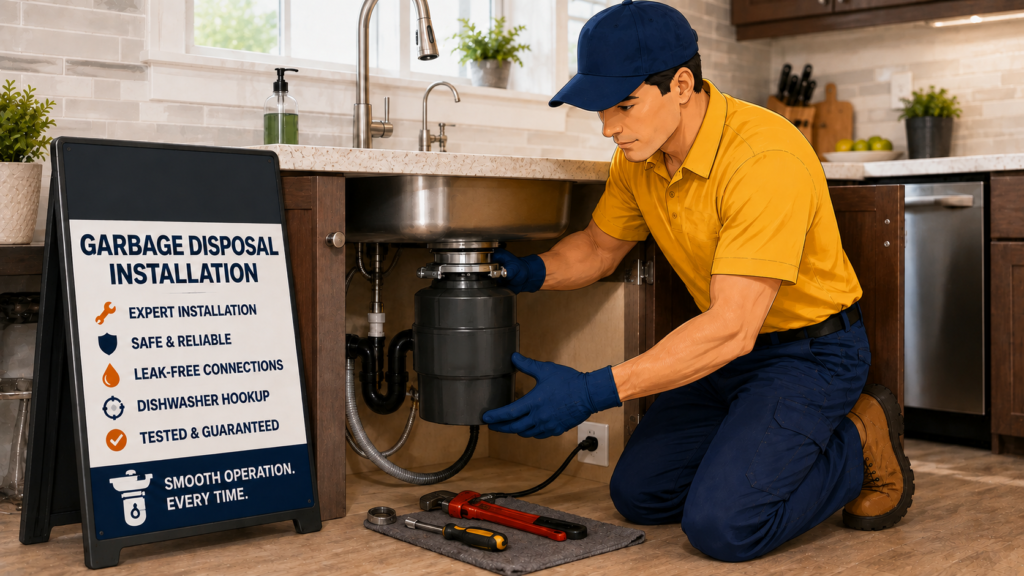
A garbage disposal is installed directly beneath the kitchen sink and connected to both the sink opening and the drain system. The unit may also receive wastewater from the dishwasher through a dedicated inlet connection.
Although the installation may appear simple, several components must work together correctly. The sink flange must create a watertight seal, the mounting assembly must safely support the unit, and the discharge pipe must align with the existing trap and drain.
Poor alignment can place stress on the disposal body and surrounding pipes. An improperly sealed sink flange may allow water to collect beneath the sink, while an incorrect dishwasher connection may cause dirty water to remain inside the appliance.
Professional installation ensures that the unit is compatible with the sink, properly supported, correctly connected, and accessible for future maintenance.
Signs You Need a New Garbage Disposal
A garbage disposal may continue operating even after important components have begun deteriorating. The motor may sound different, the unit may vibrate excessively, or water may leak only while the sink is being used.
Replacement may be appropriate when the disposal repeatedly jams, no longer grinds food effectively, produces strong odors that return after cleaning, or requires frequent resetting. Water leaking from the bottom of the unit often indicates internal failure that cannot be reliably repaired.
Other warning signs include:
- Frequent humming without normal grinding
- Cracks or corrosion around the disposal body
- Water leaking from the mounting assembly
- Wastewater backing up into the sink
- Loose or unstable connection beneath the sink
- Unusual grinding, rattling, or metallic sounds
- Repeated drain blockages near the unit
- A disposal that no longer turns on
- Leakage around the dishwasher connection
A professional inspection can determine whether the problem involves the disposal itself or the surrounding sink and drain plumbing.
New Garbage Disposal Installation
A kitchen that has never had a garbage disposal may require more preparation than a standard replacement.
The sink must have a compatible drain opening and enough cabinet clearance for the selected unit. The existing trap and drain may need to be repositioned so wastewater can flow properly from the disposal outlet.
A dedicated electrical connection and appropriate control method are also required. Depending on the kitchen design, the disposal may be operated by a wall switch, an air switch, or another approved control.
When a dishwasher is connected, the appliance drain hose must be routed to the disposal inlet or another approved drainage connection. The disposal’s factory inlet plug must be removed before the dishwasher hose is attached.
New installation should be coordinated with any planned sink, countertop, cabinet, faucet, dishwasher, or kitchen plumbing changes.
Garbage Disposal Replacement
Replacing an existing disposal is often more straightforward when the new unit is compatible with the current sink opening, mounting assembly, electrical connection, and drain configuration.
However, not every replacement unit has the same dimensions or discharge height. A larger or more powerful disposal may sit lower beneath the sink and require changes to the trap or drain piping.
During replacement, we inspect the existing sink flange, mounting hardware, drain connections, dishwasher hose, electrical setup, and cabinet area for leakage or damage.
The old unit is disconnected and removed. The new disposal is then installed, aligned with the drain, connected to the dishwasher when applicable, and tested with running water.
Existing components should not be reused automatically when they are corroded, damaged, loose, or incompatible with the replacement unit.
Our Garbage Disposal Installation Process
The service begins with an inspection of the sink, existing disposal, cabinet space, drainage piping, dishwasher connection, and visible electrical components.
We confirm that the replacement unit is compatible with the sink and that its discharge outlet can connect properly to the existing drain.
Water and electrical power are shut off or isolated as required. The old disposal and mounting components are removed, and the sink opening is cleaned before the new flange and mounting assembly are installed.
The disposal is secured beneath the sink and aligned with the drainage system. The discharge pipe and dishwasher hose are connected without placing unnecessary stress on the unit or surrounding plumbing.
After installation, we run water through the sink and operate the disposal while checking the flange, mounting assembly, discharge connection, trap, and dishwasher inlet for leaks.
The unit is tested for normal sound, stable mounting, complete drainage, and reliable operation.